What a Payment App Card Actually Is
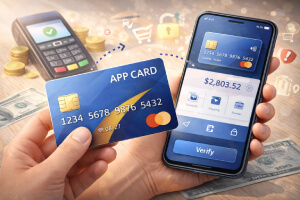
The payment app card is a real card that is virtually linked to the balance in a mobile payment app that has in its money pockets enough to load with the actual currency. It channels assets through the app's various balances, as opposed to directly from the account. Legislatively, it is a parallel-mode act of a debit card. Swipe it, tap away, or key in your number online directly, and the debited money moves from the wallet herd-mind!
The key difference sits behind the scenes. Because the card is tied to a digital wallet, spending limits, security rules, and transaction visibility are controlled through the app. Some users like this setup because it keeps spending contained. Others use it as a buffer between their main bank account and everyday purchases.
Why Card Activation Is Required
Activation confirms that the card reached the right person and that the account holder intends to use it. Until activation happens, the card number is essentially dormant. This step reduces the risk of cards being intercepted or misused before the owner even knows they exist.
Activation also links the physical card to the correct app profile. Without it, the system cannot reliably match transactions to the wallet balance, which is why unactivated cards usually decline immediately.
How Card Activation Usually Works
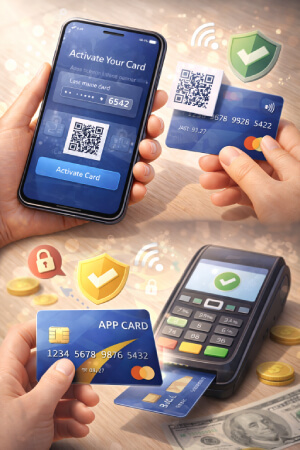
In App Activation
Most payment app cards are activated directly inside the app. After logging in, users are prompted to confirm receipt of the card. This often involves entering the last few digits of the card number or scanning a QR code printed on the packaging.
The app may also ask for additional confirmation, such as a PIN setup or a short security check. Once completed, the card status updates almost instantly.
Activation by First Use
Some cards then automatically activate once a chip transaction has been initiated. This commonly involves inserting the card into a terminal before entering a PIN. Contactless payments might not yet have been enabled until much later down the road. To give an example, users who will probably conclude that something is wrong because they keep getting declined might try tapping before they complete the secure chip transaction. In truth, the card has not crossed that first activation threshold.
Timing and Processing Delays
Activation is usually immediate, but delays can happen. App outages, weak connections, or partial activation steps can leave the card in a pending state. Waiting a few minutes and restarting the app often resolves this.
Common Problems During Activation
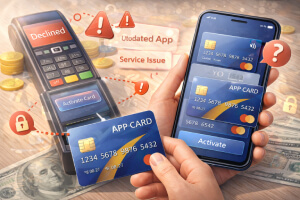
- Card Shows as Activated but Declines - This often happens when activation completed partially. Contactless features may still be disabled, or the balance may be insufficient for the attempted transaction. Checking card settings inside the app usually reveals the issue.
- Activation Button Does Nothing - When the app does not respond, the cause is often technical. Outdated app versions or temporary service issues can block activation steps. Updating the app or trying again later usually fixes it.
- Wrong Card Linked to the Account - In rare cases, users with multiple cards may accidentally activate the wrong one. This creates confusion at checkout. Verifying the last digits of the card inside the app helps prevent this mix-up.
Using the Card After Activation
Once activated, the card works like any other payment card. It can be used for everyday purchases, online payments, and sometimes ATM withdrawals depending on app rules.
Spending controls are usually adjustable inside the app. Users can freeze the card instantly, limit transaction types, or disable international use. These features are worth exploring early, before problems arise.
What to Do if Activation Fails Completely
If repeated attempts fail, support may need to step in. Before reaching out, gather basic details such as the card delivery date, last digits of the card number, and any error messages shown in the app.
Support teams often resolve activation issues by resetting the process or issuing a replacement card. While inconvenient, this is safer than forcing activation through unofficial means.